
What’s the difference between a conservatory and an orangery?
If you’re planning to add more space to your home, chances are you’ve come across both conservatories and orangeries. At first glance, they can look quite similar, but in modern homes, the differences are more important than ever.
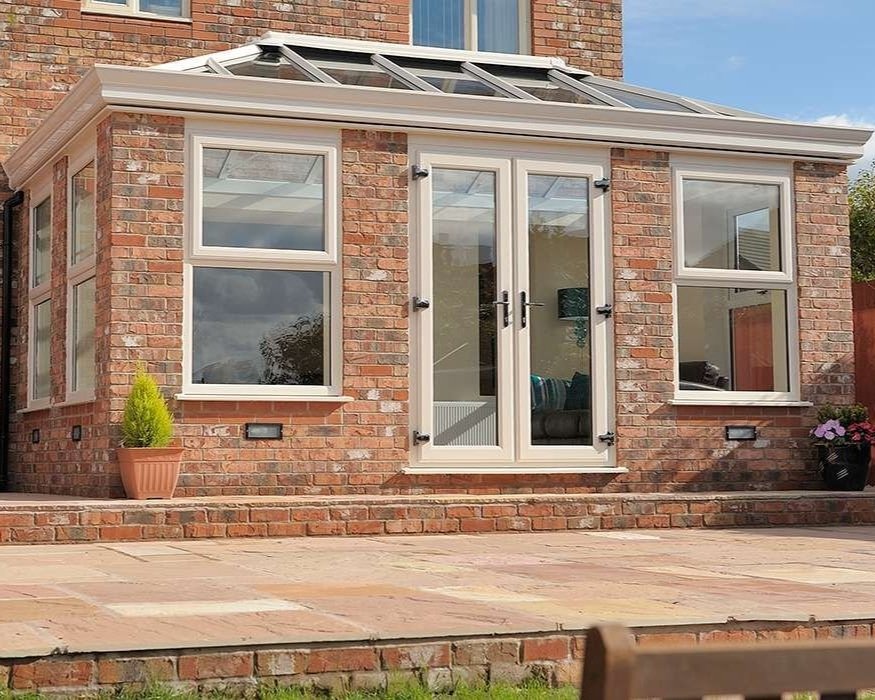
So, what’s the difference between a conservatory and an orangery? And which one is right for the way people live today?
At Bedfordshire Windows, we help homeowners create spaces that are comfortable, practical, and designed to be enjoyed all year round.
How modern living has changed garden rooms
Traditionally, conservatories were designed as light-filled spaces that connected the house to the garden. Orangeries, originally built to protect citrus trees, were more solid in construction.
Fast forward to today, and expectations have changed:
Homeowners want year-round usability
Energy efficiency matters more than ever
Spaces need to feel like a natural extension of the home
This is where the key differences start to become clear.
What is an orangery?
A common question we hear is: What is an orangery? An orangery is a hybrid between a traditional extension and a conservatory.
Key features typically include:
A solid perimeter roof with a glazed lantern or roof light (read our article on roof lanterns here).
Brick pillars or solid walls for structure
High-performance glazing
A ceiling that often allows for lighting, speakers or even roof-mounted blinds
Because of the increased solid structure, an orangery feels far more like a permanent room rather than a seasonal space.
What is a conservatory?
A conservatory is still a popular choice, particularly where homeowners want:
Maximum natural light
A more cost-effective solution
Faster installation times
Modern conservatories have come a long way, with:
Improved glazing technology
Better thermal performance
Tiled or hybrid roof options available
However, they remain more glass-dominant, especially in the roof, which can affect temperature control throughout the year.
The key differences at a glance
Roof Structure
Conservatory: Mostly glazed roof
Orangery: Part solid, part glazed (often with a lantern)
Temperature Control
Orangeries generally retain heat better in winter and stay cooler in summer
Conservatories rely more heavily on glazing performance and solar control
Look and Feel
Orangeries blend seamlessly with modern extensions and open plan living
Conservatories feel lighter and more garden-focused
Which is better for year-round living?
This is where modern lifestyles really tip the balance. If you want:
A dining room
A family snug
A home office
A space that feels like part of your home all year
An orangery is usually the better option, thanks to its insulation and solid structure, but conservatories can still work well for relaxation spaces, garden rooms and for homes where light is the top priority.
Are orangeries cheaper than extensions?
Another common question is: Are orangeries cheaper than extensions? In many cases, yes.
While an orangery is typically more expensive than a basic conservatory, it is often more cost-effective than a full brick extension, particularly when you consider the reduced build time, less groundwork, lower disruption to your home, and similar visual impact and usability.
For many Bedfordshire homeowners, an orangery offers the ‘best of both worlds’, the feel of an extension, without the full extension price tag.
Planning permission considerations
Both conservatories and orangeries are often built under permitted development, subject to size and location. However, every property is different, and factors such as listed status or previous extensions can affect this. For more information on planning permission, have a read of this article by Homebuilding & Renovation and the team at Bedfordshire Windows, will guide you through the process to ensure everything is compliant from the start.
Which should you choose?
When deciding what’s right for your home, ask yourself:
Do I want a space I’ll use all year?
Do I want it to feel like part of my existing home?
Is energy efficiency a priority?
Am I comparing it to the cost of an extension?
If the answer is yes, an orangery is often the modern solution. If your priority is light, speed of installation, and a more traditional garden room feel, a conservatory may be ideal. There are also lots of options to choose from to make your new space bespoke to you, from a choice of colour, door styles (bifold doors, sliding doors, French doors), and internal blinds!
Every home is different and so is every family, so if you’re still weighing up what’s the difference between a conservatory and an orangery, our team is here to help. We’ll talk through your ideas, assess your property, and help you choose a solution that fits your home and lifestyle perfectly.
Contact us today to arrange a consultation.
Take a look at our TrustATrader page and see over 700 reviews from satisfied customers!